




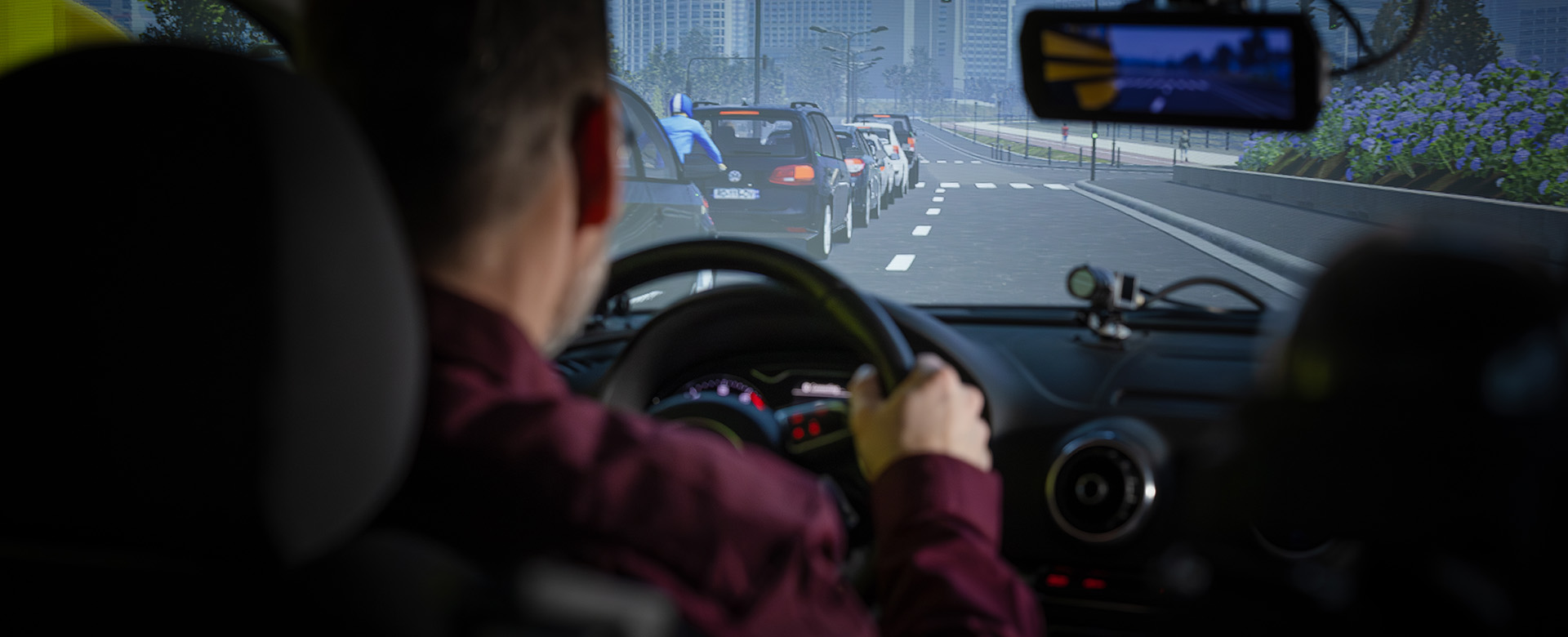
The ORF funds will support technological enhancements to DriverLab, including the development of more realistic, high-fidelity driving environments.
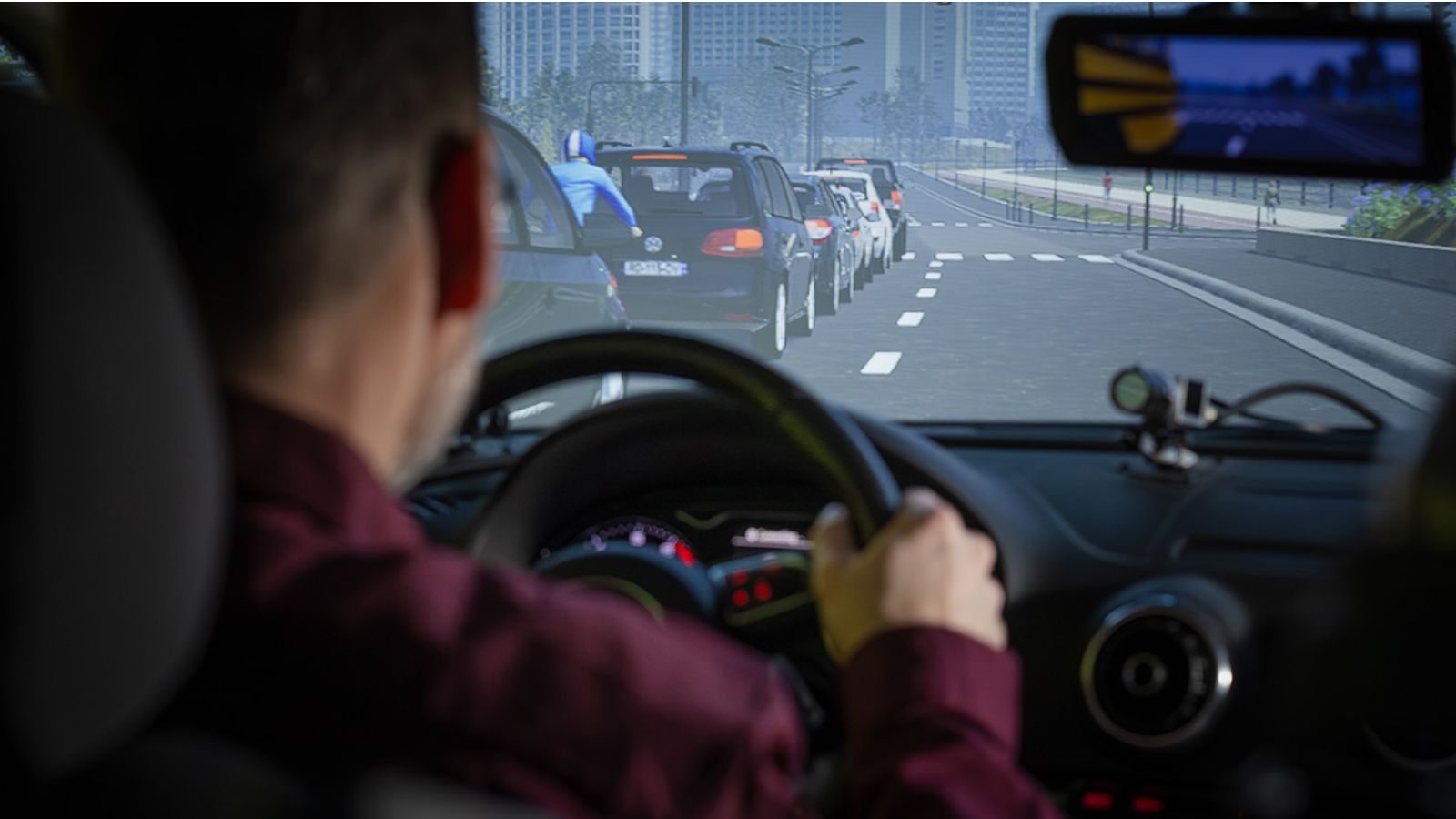
The ORF funds will support technological enhancements to DriverLab, including the development of more realistic, high-fidelity driving environments.
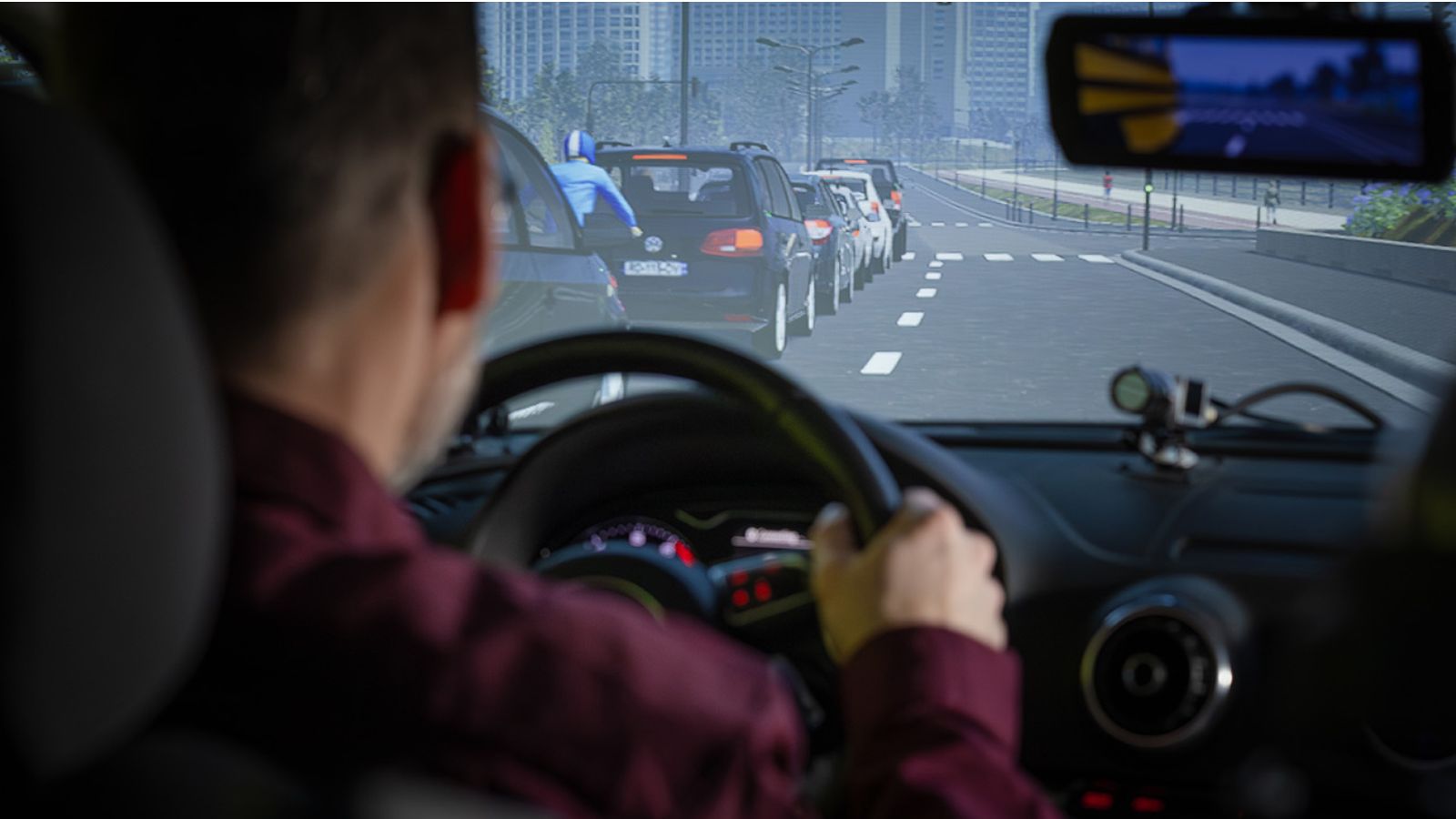
The ORF funds will support technological enhancements to DriverLab, including the development of more realistic, high-fidelity driving environments.
KITE Senior Scientist Dr. Jennifer Campos received $400,000 from the ORF Small Infrastructure Fund to support studies into aging and driving safely.
“For many people, driving is an essential component of independence," says Dr. Jennifer Campos, Chief Scientist for the Challenging Environment Assessment Laboratory (CEAL) and Senior Scientist at UHN's KITE Research Institute. "The goal of DriverLab is to ensure people maintain driving autonomy for as long as it is safe to do so."
This work has gained support this year through the Ontario Research Fund. The fund, which invests in research projects at universities, colleges, and hospitals across Ontario, contributed more than $400,000 towards KITE for research on safe driving in older adults. According to Transport Canada, in 2020, the cost of Canadian motor vehicle collisions was estimated at $36 billion.
Older adulthood is commonly accompanied by changes in sensory and cognitive function, including declines in vision and hearing, that may affect driving performance. The prevalence of medical conditions with potential consequences for driving, such as stroke and dementia, also increases with age.
KITE's research aims to support safe and independent driving in older adults through developing safer driving technologies, training interventions to support skills important for driving, and informing policies related to licensing and vehicle design. It's done in DriverLab, Canada's most advanced state-of-the-art driving simulator. “The lab was designed and intended to be a multifunctional, flexible space that you can do all these different kinds of research projects in,” says Dr. Bruce Haycock, a staff scientist at KITE and lead engineer for CEAL.
Studying aging and driving safety at UHN's KITE Research Institute
The research in DriverLab investigates innovative strategies to enhance driving safety, combining comprehensive research approaches with technological advancements. Upcoming studies include understanding how sensory impairments such as hearing loss influence driving and what interventions can reduce risk; examining the effects of medications on driving performance; and optimizing automated vehicles for older adults with cognitive impairment.
One area of research that KITE’s currently working on is how age-related hearing loss influences driving performance. People with hearing loss may have a higher risk of collisions because they are less able to detect alerts or interpret environmental sounds, or because listening becomes very effortful, thereby taking attentional resources away from driving.
"When you're driving, you have to look, listen, plan, and navigate simultaneously," Dr. Campos says. "It's a complex process. It feels automatic, but it's not and places a lot of demands on the brain."
The overall objective of this research is to examine behavioural and neural outcomes while driving in older adults with and without hearing loss during the dual-task of listening while driving.
Another area of research that KITE is looking into is how some people with stroke develop visual impairments, including a reduced visual field (the area that can be seen at one time without moving the eyes or head). In Ontario, drivers must have a continuous horizontal visual field of at least 120 degrees.
Previous research led by KITE collaborator Dr. Michael Reber at UHN’s Krembil Research Institute suggests that multisensory, virtual reality–based training may help expand an individual’s visual field. However, while these interventions may improve performance on basic tests of vision, we do not yet know whether these gains translate into better functional performance while driving.
Therefore, Dr. Campos explains, “In this collaborative study, participants will complete several weeks of virtual reality–based visual-field training at home. Their peripheral vision and driving performance will be assessed before and after the intervention in DriverLab, allowing us to determine whether improvements in basic tests of visual function also lead to better driving performance and hazard detection.”
Boosting DriverLab's simulation technology
The Ontario Research Infrastructure funds will also support technological enhancements to DriverLab, including the development of more realistic, high-fidelity driving environments.
The new technology includes new software and new computers that will run the dome projection system. This will allow for better rendering of DriverLab's virtual worlds.
Other improvements include new mirror displays and updates to the glare panels that recreate the glare from oncoming headlights.
This research could pave the way for safer driving for older adults, in a variety of ways. “Safe mobility is fundamental to independence and participation in the community,” says Dr. Campos. “Our goal is to ensure that evidence informs every aspect of driving safety, from driver training and rehabilitation, to vehicle design and licensing policy, so that people have every opportunity to remain safely mobile.”