

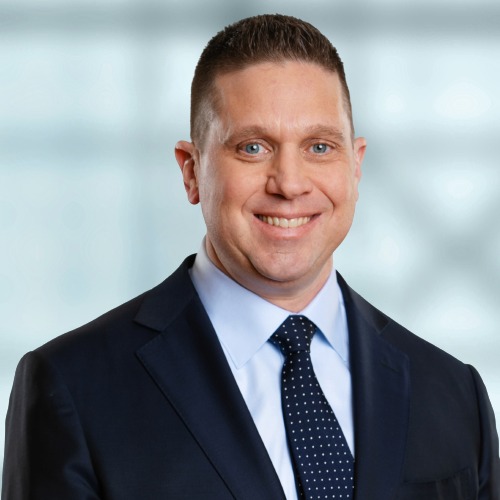


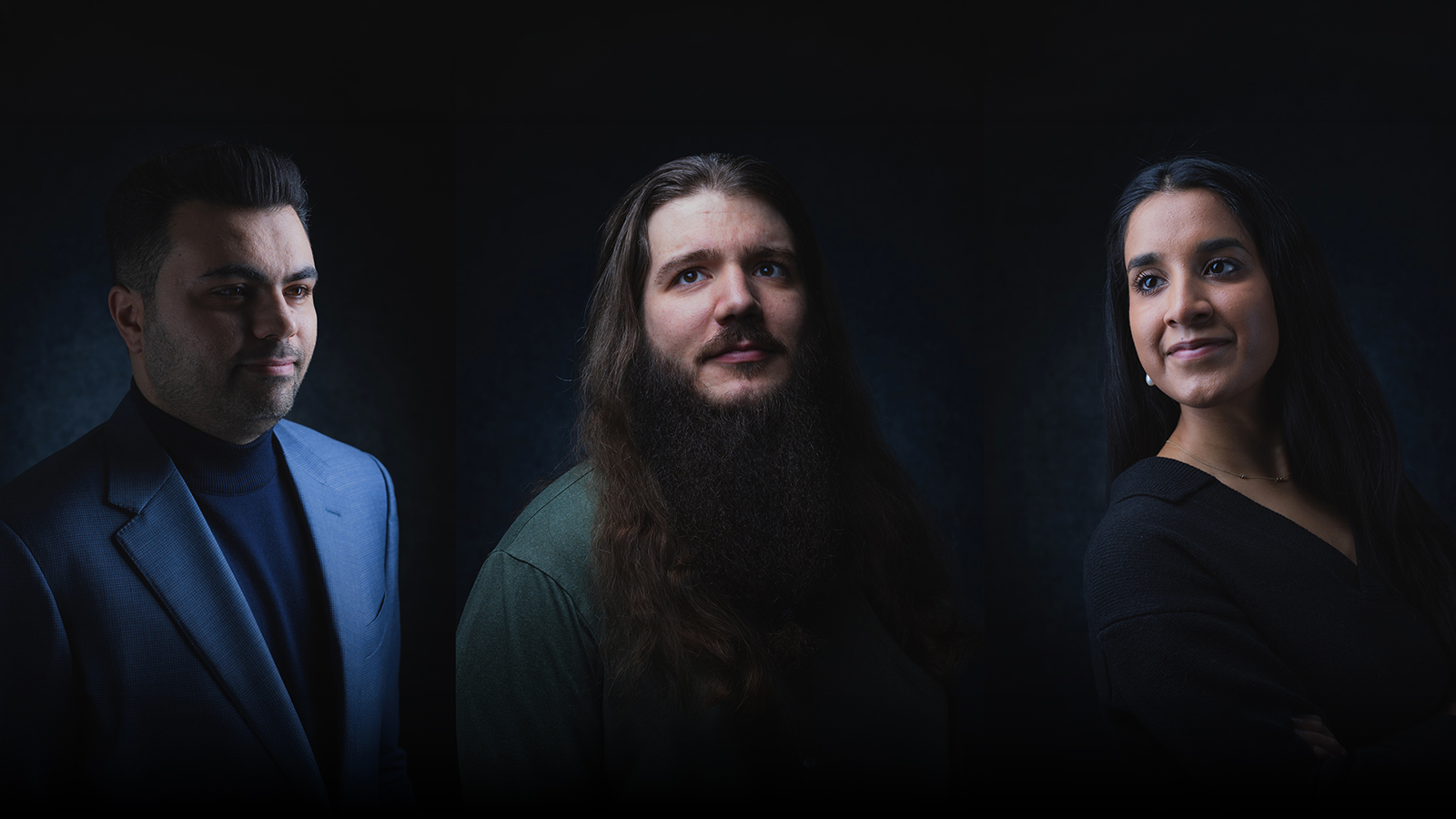
Dr. Omid Aghababaei Tafreshi, Dr. Michael Ryne Horn, and Dr. Ambika Bansal have joined the KITE team.
Three postdoctoral scientists are joining KITE, working on new treatments for sleep apnea, chronic pain, motion sickness and improving function after injuries.
The University Health Network’s KITE Research Institute has welcomed its first researchers recruited through the Canada Leads 100 Challenge.
Canada Leads is an ambitious effort to attract 100 of the world’s most promising early-career researchers to UHN—thanks to generous support from UHN Foundation and The Princess Margaret Cancer Foundation. To date, the program has awarded 61 applicants more than $18.5 million in collective funding.
The first postdoctoral researchers joining KITE through the program are Dr. Omid Aghababaei Tafreshi, Dr. Michael Ryne Horn, and Dr. Ambika Bansal. Through the Canada Leads initiative, they will gain access to funding, specialized educational programming focused on translating research into health innovation and impact, and networking events with experienced entrepreneurs and industry experts.
“Canada Leads is going to help us develop and commercialize groundbreaking medical technology here in Canada — to benefit all Canadians, and the world,” said KITE Institute Director Dr. Milos R. Popovic. “I’m happy to welcome the three Canada Leads researchers to KITE and look forward to more brilliant minds joining us through this program.”
The three researchers bring a remarkably broad range of experience — from scientific work connected to the International Space Station to developing newly patented next‑generation nerve‑blocking technologies — to KITE. Here's what they'll be working on:
Transforming How We Target Nerves to Reduce Chronic Pain and Improve Function After Injury
Dr. Horn is a biomedical engineer who holds a patent on using low-frequency alternating current waveforms as a method of nerve block. At KITE, he’s working with Dr. Jose Zariffa and studying how different electrical signals could affect nerve activity. His research could lead to safer, more personalized treatments for everything from functional electrical stimulation for people with spinal cord injuries to electrical nerve block for chronic pain.
“The Canada Leads program is giving me the support I need to focus on a research direction I’m really passionate about: developing more precise ways of influencing the nervous system,” says Dr. Horn.
Today, most devices that use electrical stimulation rely on quick, sharp electrical pulses. Dr. Horn is exploring whether smoother, wave‑like signals could do a better job of activating or blocking specific nerves. To test this, he is using improved electrodes and monitors that allow him to observe how the nerve itself responds, rather than relying on indirect signs such as muscle twitches. He then analyzes these signals using deep learning and computer models to precisely understand how different waveforms change nerve behaviour.
“This research could lead to treatments that are more precise, more comfortable for patients, and better at targeting only the nerves we want to influence,” he says.
Improving Driving Safety and Reducing Motion Sickness Through Sensory Research
While pursuing her PhD in neuroscience, Dr. Bansal studied how the brain uses sensory information to guide movement, including research on how astronauts perceive their movement aboard the International Space Station. So it’s fitting that she’s now come to KITE, home of the Challenging Environment Assessment Laboratory — nicknamed “Rehab NASA.”
“I’m incredibly grateful to the Canada Leads program for giving me this opportunity. This work wouldn’t be possible without their support,” Dr. Bansal says.
Using KITE’s driving simulator, Dr. Bansal will examine how older and younger adults drive under challenging conditions, such as heavy rain or glare. This work helps researchers better understand how age-related changes in sensory processing affect driving performance and safety in challenging real-world scenarios, potentially improving safety for older drivers.
She’s also researching motion sickness in virtual environments and how mismatches between the senses can cause discomfort or disorientation, under the supervision of Dr. Behrang Keshavarz. Dr. Bansal is evaluating whether a wearable belt that delivers targeted vibrations can strengthen or recalibrate signals to the body when they are misaligned with those from the eyes, reducing or even eliminating motion sickness in VR.
Developing Next‑Generation Sleep Apnea Technology
Dr. Tafreshi is developing advanced biomedical treatments for obstructive sleep apnea under the supervision of Dr. Popovic. This project has the potential to change how sleep apnea is diagnosed and managed, making treatment more comfortable, responsive, and accessible.
The postdoctoral researcher is refining a smart device that will both monitor and treat sleep apnea in real time. This custom-fitted oral appliance is worn over the teeth during sleep, like a mouth guard. It monitors for airway collapse in people with sleep apnea and then uses painless functional electrical stimulation to restore breathing.
This device is an alternative to CPAP therapy that is a targeted, personalized intervention rather than a one-size-fits-all approach. This is crucial because discomfort leads to more than 40% of CPAP users not using their machines for long enough at night.
Once the device is finalized, Dr. Tafreshi will help lead clinical trials to evaluate its performance in real-world settings across diverse patient groups, and then use the results to further optimize it. This important work wouldn’t be possible without Canada Leads funding, he says. “The Canada Leads program will significantly strengthen my ability to translate academic research into real-world healthcare solutions."