




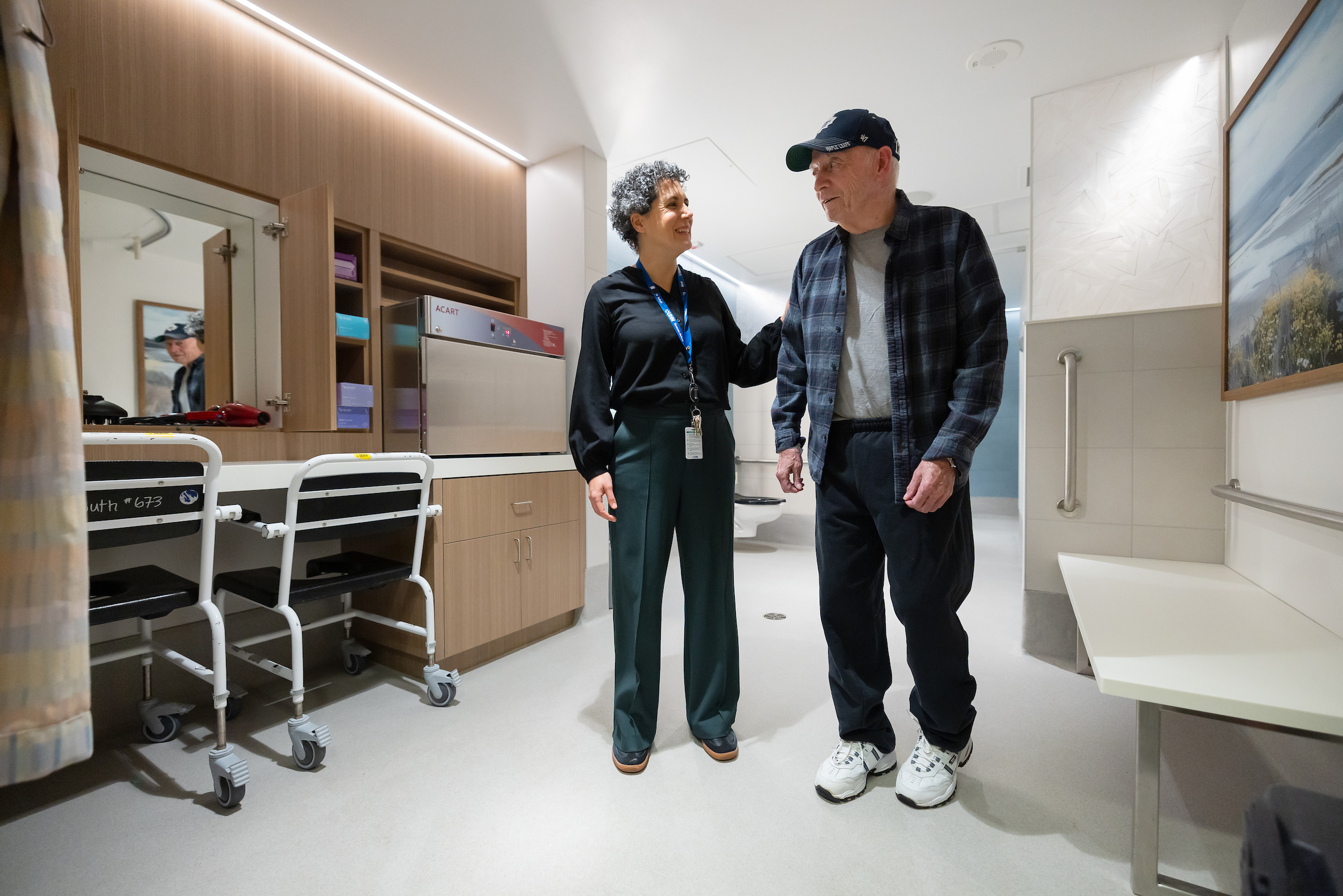
Dr. Andrea Iaboni, a KITE scientist, geriatric psychiatrist and medical lead of the Specialized Dementia Unit, with a patient in the new shower room.
Dr. Andrea Iaboni’s team reviewed evidence on dementia‑friendly bathing to inform the redesigned shower space in Toronto Rehab's Specialized Dementia Unit.
For many people living with dementia in long-term care homes and hospitals, showering isn’t just uncomfortable—it can feel overwhelming and even frightening. They're undressed by someone else, led into a cold, echoing room, and asked to go under the water, without the experience feeling familiar and without understanding why it's necessary. It’s no surprise that showering often becomes a source of stress for both residents and the staff who assist them.
A recent review from UHN’s KITE Research Institute shows that thoughtful design can change that. Its findings have already shaped care at UHN’s Toronto Rehab, where the shower space in the Specialized Dementia Unit was redesigned to create a warmer, more calming environment.
This process began with a design review done in partnership with OCAD University's Maya Desai and Bruce Hinds in the Design for Health Graduate Program. “The OCAD team came and evaluated all the spaces in our unit in terms of how they could be improved for design in dementia, and the shower rooms really stood out as a particular pain point,” says Dr. Andrea Iaboni, a KITE scientist, geriatric psychiatrist and medical lead of the Specialized Dementia Unit.
But there wasn’t good evidence around how to design bathrooms for dementia patients. So, Dr. Iaboni led a study that identified 34 best practices for shower and bath design in dementia units.
The research, “Best practices for the design and evaluation of bathing spaces for older adults with cognitive impairment in residential care settings: A scoping review,” was published in the issue of the Journal of the American Medical Directors Association.
Its recommendations include offering music or sounds, concealing institutional elements and storage, installing temperature-regulated, detachable showerheads, creating warmer rooms, providing privacy barriers, and minimizing glare, noise, and echoes. It also covers areas unrelated to design, such as staff training programs, offering residents more choices, and mindful communication.
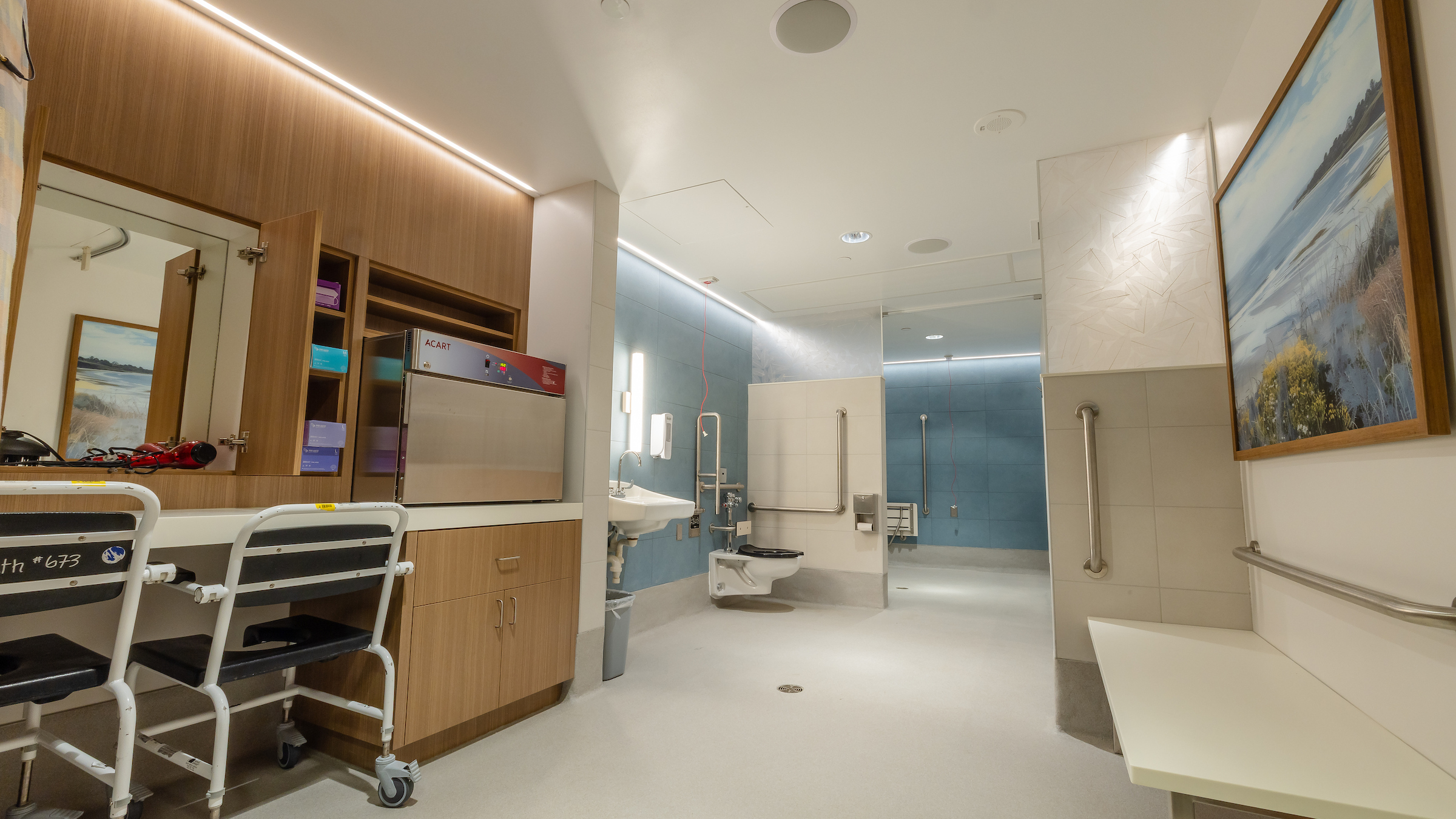
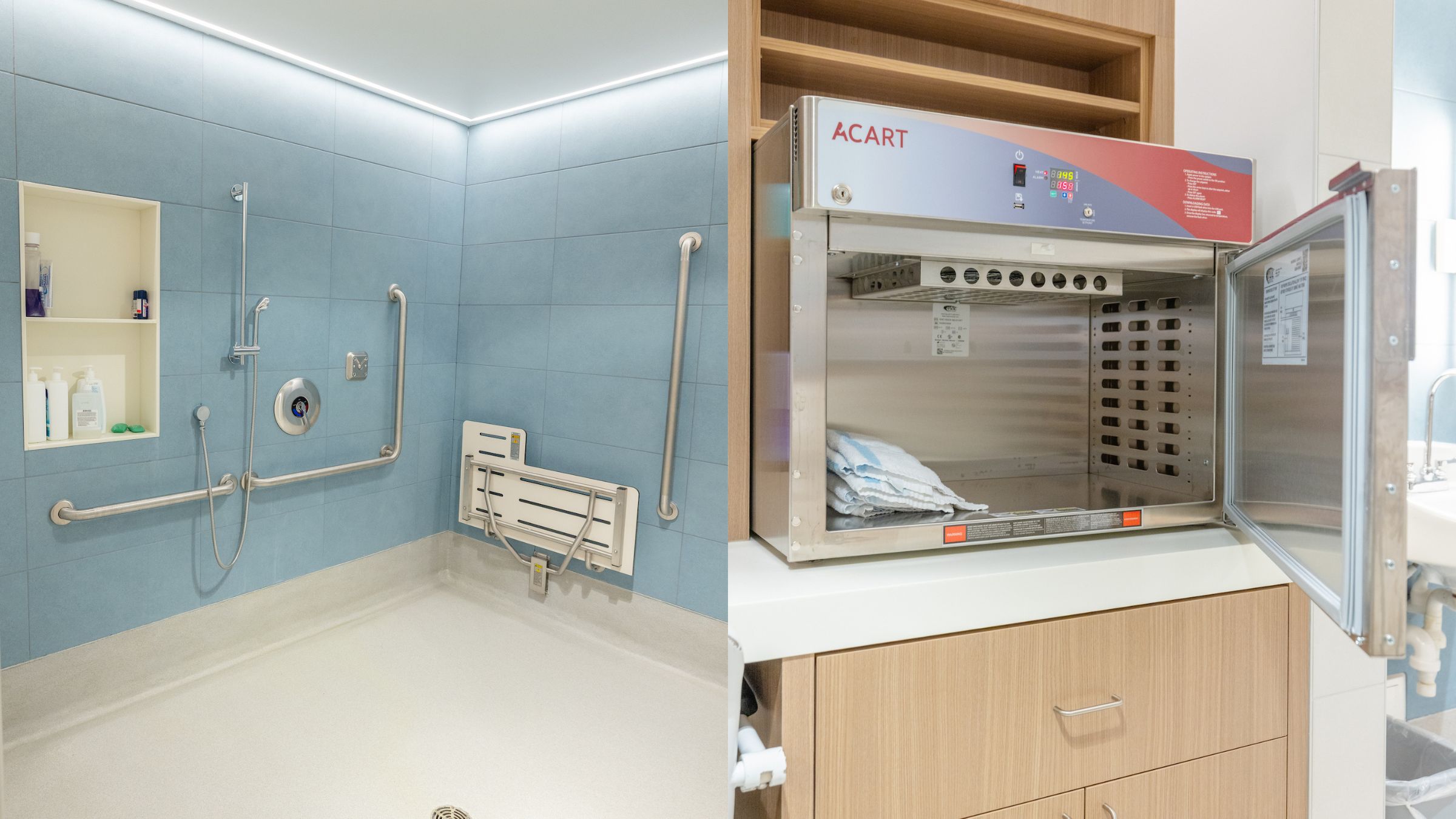
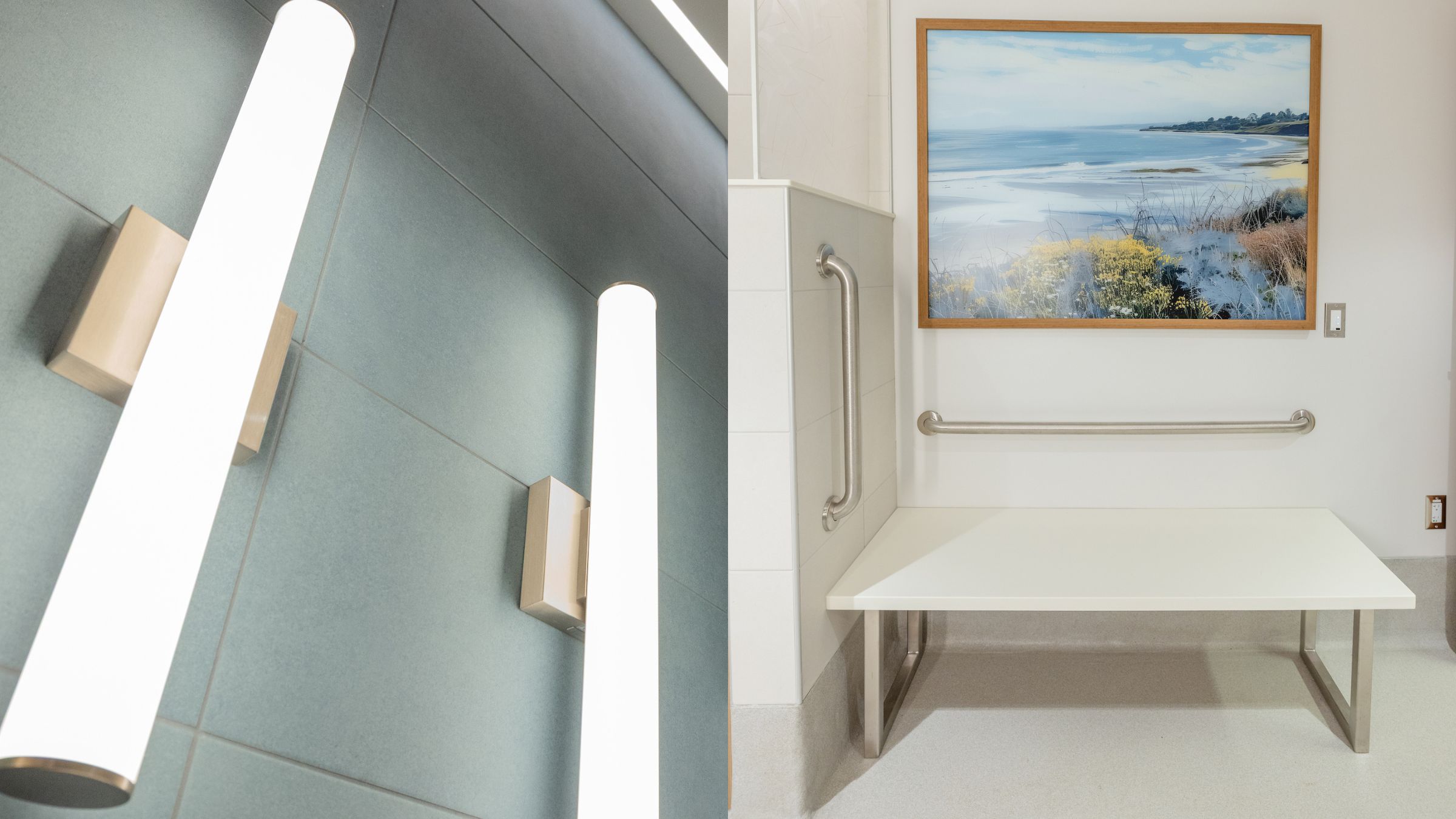
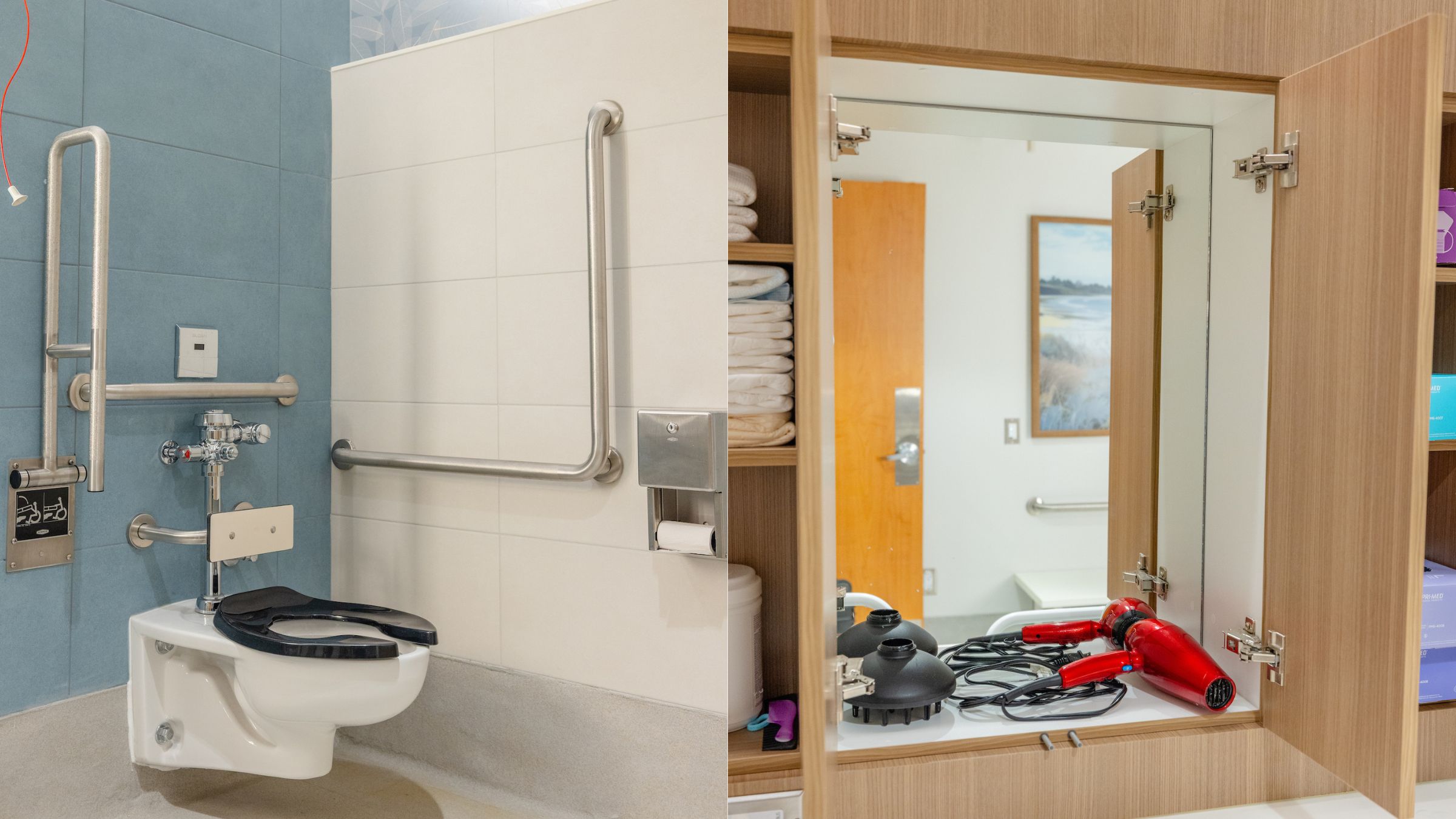
Those principles informed the redesign of the shower room in the Specialized Dementia Unit. It has a number of changes, including:
- A soothing visual design
- A large, accessible shower
- A towel warmer
- Soft lighting that reduces glare
- A place to sit and change
- Calming art
- A spacious layout that includes an accessible toilet
- A grooming station
- A heating panel for warmth
- A towel warmer
- And slip-resistant flooring
Along with the new shower room, unit staff are also receiving training on improved dementia shower care procedures. The training includes using personalized approaches, building trust, and being flexible.
The impact of the redesign and training is currently being evaluated, but anecdotally, Dr. Iaboni says it seems to have made showering easier for patients and the staff helping them.
“Our impression is that this new shower space has made a big difference and had a big impact,” says Dr. Iaboni. “It’s more serene, calming and less claustrophobic, and provides lots of options to support patients who are receiving their showers.”
The bathroom is the latest design change the team has studied. Previous interventions included adding different decals to the unit's doors and clouds and blue-sky pictures to the ceilings to create a brighter, friendlier feeling. “We’re constantly trying new design innovations to make things better,” says Dr. Iaboni.
The shower renovation is part of a larger design overhaul that the team hopes to make over the next few years. They would like to create a quiet activity room that offers a place to decompress; make cooking and food more visible in the dining room to provide cues that support eating well and staying hydrated; and improve lighting across the unit to help reduce falls and support good sleeping habits.
Although it’s not always top of mind, design can have a large influence on behaviour for people with dementia, says Dr. Iaboni. “Many people come to our unit because they have responsive behaviours [like aggression or restlessness], and the environment can contribute to that,” she says. It’s not unusual for patients who come from acute care to have their unwanted behaviours improve when they are transferred to the more dementia-appropriate unit.
“When you give people cues and comfortable spaces, and an opportunity to find quieter spaces, they can help regulate themselves and their emotions, and then you can actually improve people's behaviours, even without any other interventions,” she says. “The treatment, in many cases, is to change the environment.”