




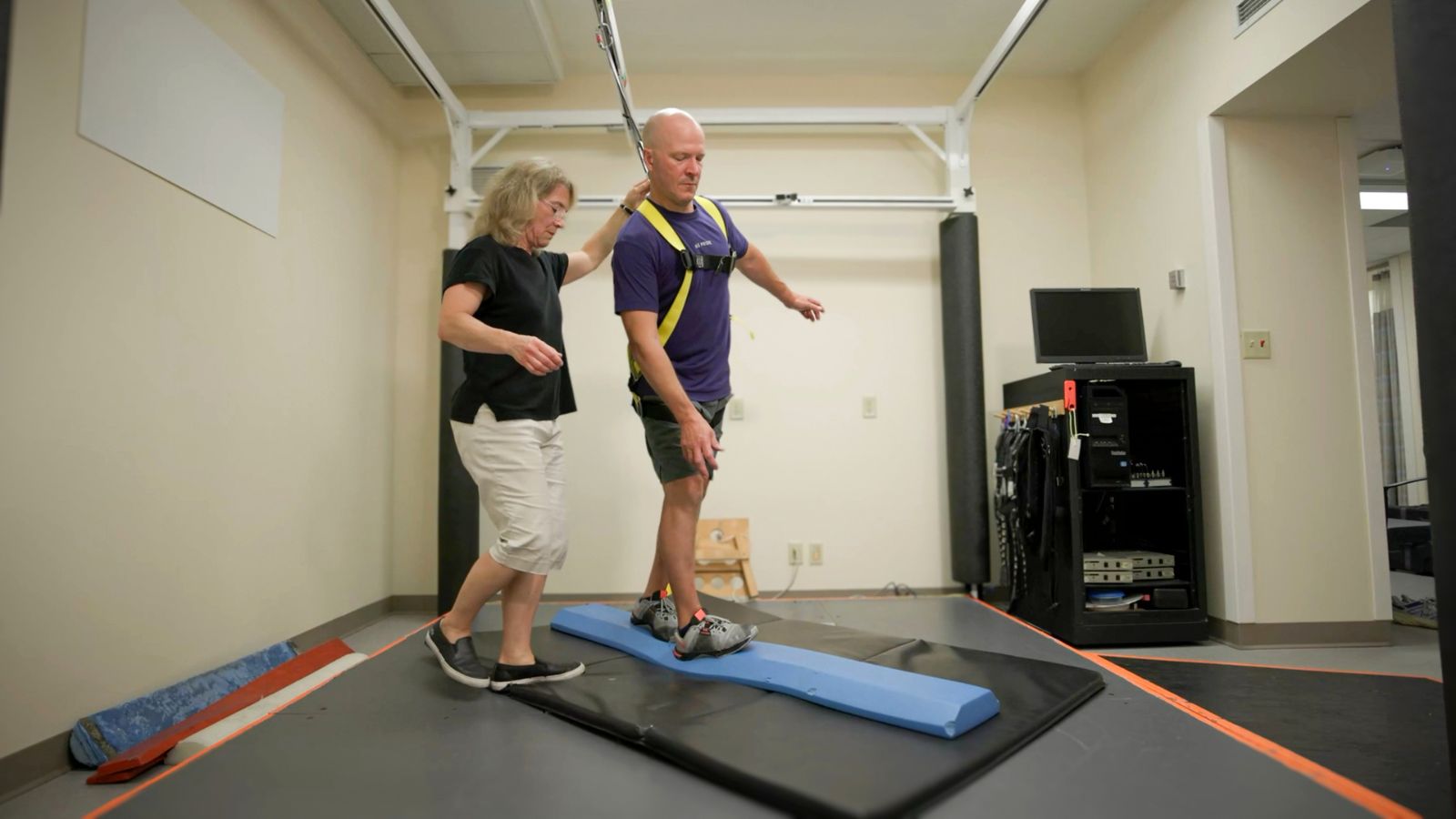
A man does Reactive Balance Training with a clinician at UHN's KITE Research Institute.
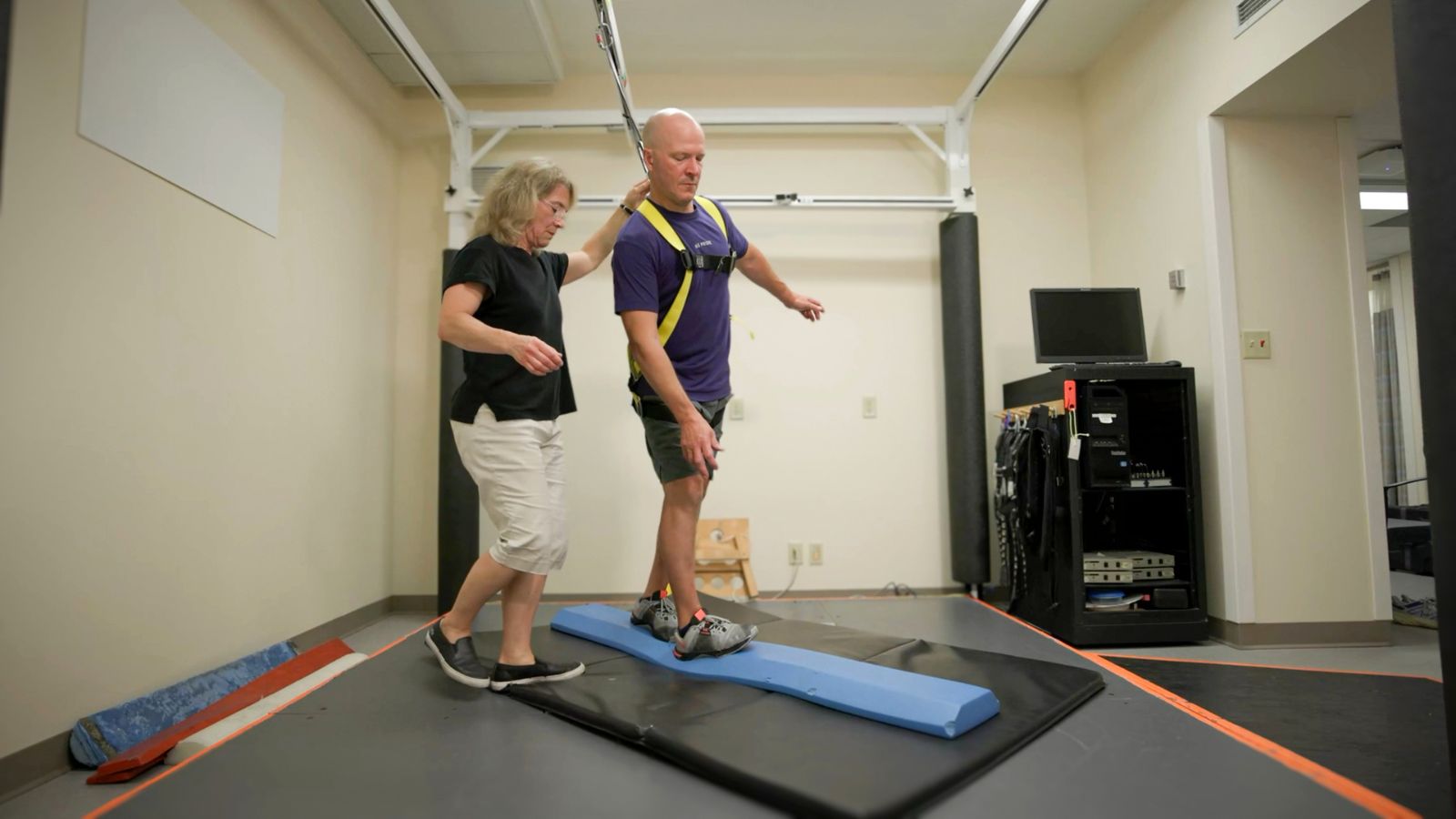
A man does Reactive Balance Training with a clinician at UHN's KITE Research Institute.
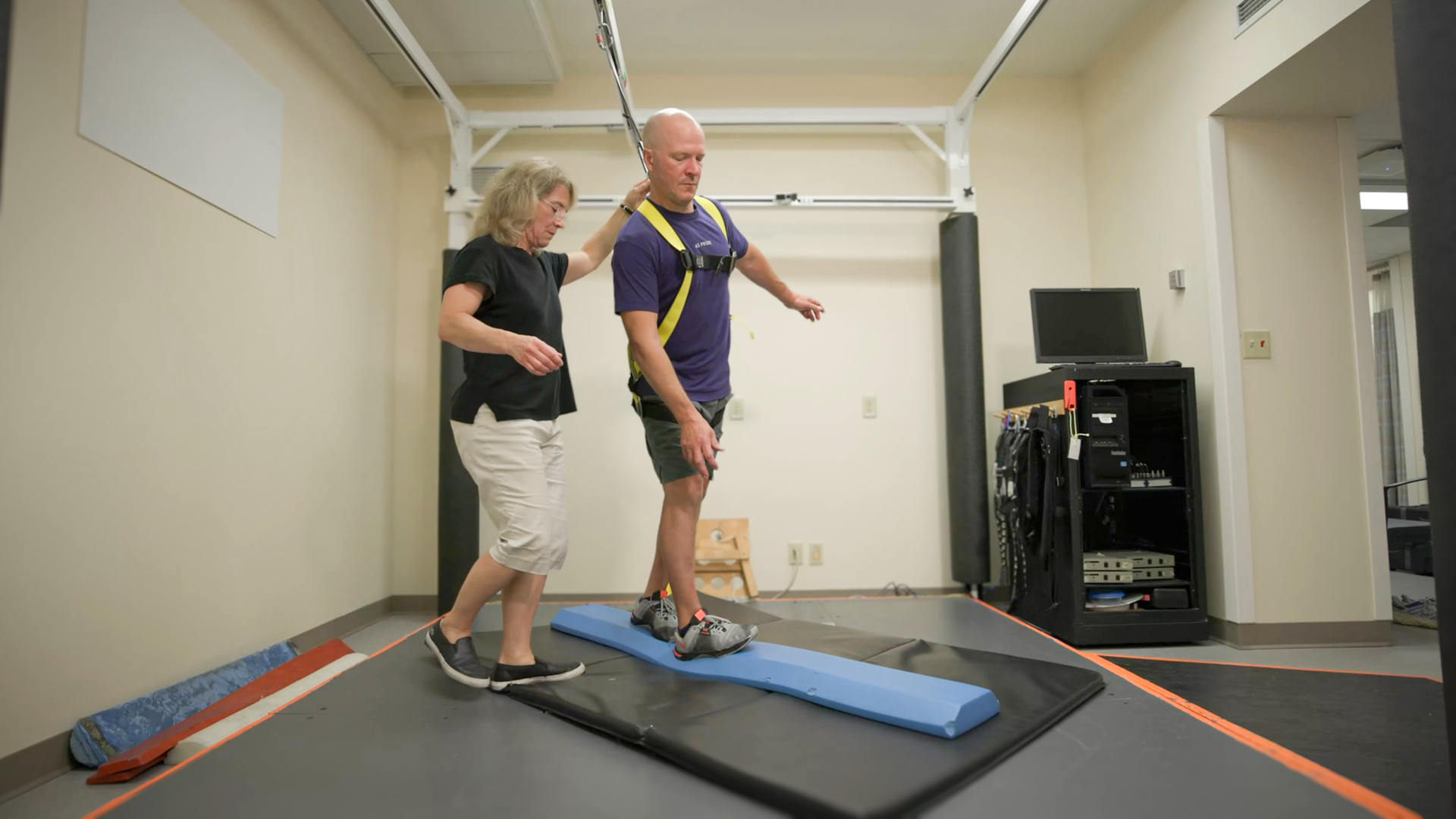
A man does Reactive Balance Training with a clinician at UHN's KITE Research Institute.
UHN’s KITE Research Institute updated its popular fall-prevention toolkit with new evidence and clearer visuals for physiotherapists.
Everyone loses their balance sometimes. A foot catches on a curb, or a slip on a wet floor, and what happens in the next split second decides whether the person falls.
That moment is the focus of a refreshed Reactive Balance Toolkit (ReBal kit) from UHN’s KITE Research Institute. Released for Fall Prevention Month this November, the updated Reactive Balance Training Toolkit gives physiotherapists and other rehabilitation clinicians the guidelines, videos and resources to bring reactive balance training into their practice.
The first version of the toolkit came out about five years ago. Since then, it has been accessed about 10,000 times across 70 countries.
“Our previous version came out in 2021, and since then, there’s been a lot of research about how to best implement reactive balance training in practice, which we've included in this new version,” says Dr. Avril Mansfield, senior scientist at KITE, who led the toolkit with Elizabeth Inness. “The toolkit includes all the information that clinicians need to use reactive balance training in practice.”
In the training program, people practice recovering after losing their balance while wearing a safety harness. A therapist pushes, pulls or suddenly releases them, or gives them challenging tasks, so they can practice the fast steps and reach that stop a fall. The evidence is promising: In a review of 29 small, randomized trials, people who completed Reactive Balance Training had about 40% fewer falls in daily life than people who did other exercise programs.
The new edition adds the latest research, clearer visuals, a treatment planning guide, a training log, equipment suggestions, and a handout to help patients know what to expect. It’s designed for clinicians working with older adults and people with neurological conditions such as stroke, Parkinson’s disease and spinal cord injury.
“We’re hoping that the toolkit can enable more clinicians to use reactive balance training in their practices, which would mean more patients participating and fewer falls,” says Dr. Mansfield.
The toolkit is available at kite-uhn.com/tools/rebal.